Community Emergency Response & Basic Life Support Training
Structured Heartsaver emergency response training designed for individuals, workplace teams, educators, community responders, and non-healthcare professionals who may need to respond to medical emergencies, cardiac arrest, choking, or first aid situations.
CO-AT provides simulation-focused Heartsaver education using structured emergency response methodologies, realistic practical training, and internationally aligned emergency preparedness education standards.
Heartsaver training is a structured emergency response education program focused on teaching essential lifesaving skills for cardiac emergencies, choking, CPR, AED usage, and basic first aid response.
The course is designed for individuals who are not healthcare professionals but may need to respond during emergencies in workplaces, schools, public environments, or community settings.
Heartsaver training supports safer workplaces, schools, organizations, and communities by improving early emergency response capability.
Because immediate action before emergency medical services arrival can significantly influence patient outcomes, early emergency response education remains an important component of public safety preparedness.
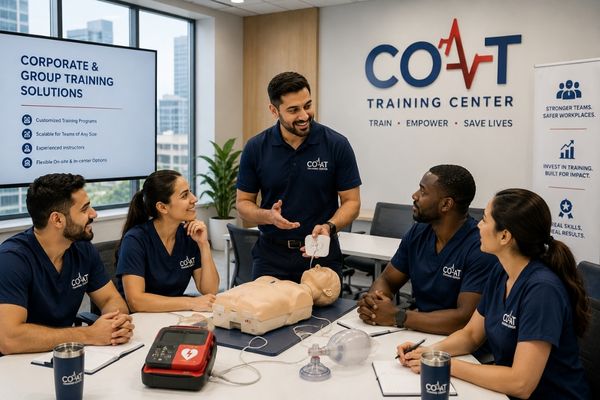
Heartsaver training is suitable for both individuals and organizations seeking structured emergency response education.
No advanced medical background is generally required for participation.
Participants will develop practical emergency response skills including:
Training focuses on practical lifesaving response skills and organized emergency preparedness.
Medical emergencies can occur unexpectedly in workplaces, schools, homes, and public environments.
Early CPR and AED use before emergency medical services arrival can significantly improve survival outcomes during sudden cardiac emergencies.
CO-AT uses a structured simulation-based emergency education model focused on practical skill development, realistic emergency response training, and organized emergency preparedness.
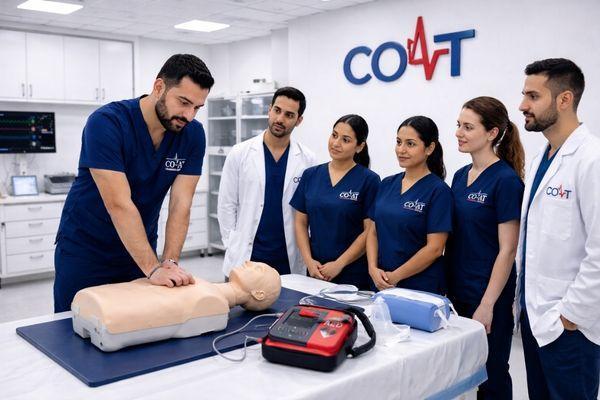
Participants train in a professional simulation environment designed to support realistic emergency response learning and confidence development.
Participants who successfully complete all required course components, practical skills evaluations, and assessments will receive the applicable American Heart Association (AHA) Heartsaver course completion card according to current provider standards and educational requirements.
American Heart Association Heartsaver course completion cards are generally valid for two years from the date of issue.
Participants are encouraged to renew training before certificate expiration in order to maintain emergency response readiness and alignment with current CPR and first aid recommendations.
CO-AT operates as an International Training Center delivering structured emergency response and life support education through simulation-focused training programs.
CO-AT is focused on advanced clinical education and emergency life support training through structured healthcare-centered learning environments.
Training is delivered within a modern simulation setting designed to support practical emergency preparedness and structured lifesaving skills development.
Heartsaver training is intended for non-healthcare professionals, workplace teams, educators, parents, community responders, and individuals seeking practical emergency response education.
Yes. The course includes structured practical CPR, AED, choking response, and emergency response training.
No. Heartsaver courses are generally designed for participants without advanced medical backgrounds.
American Heart Association Heartsaver course completion cards are generally valid for two years from the date of issue.
Depending on the selected course format, Heartsaver training may include first aid education in addition to CPR and AED response training.
Yes. Group and institutional emergency response training solutions are available for workplaces, schools, organizations, and community groups.